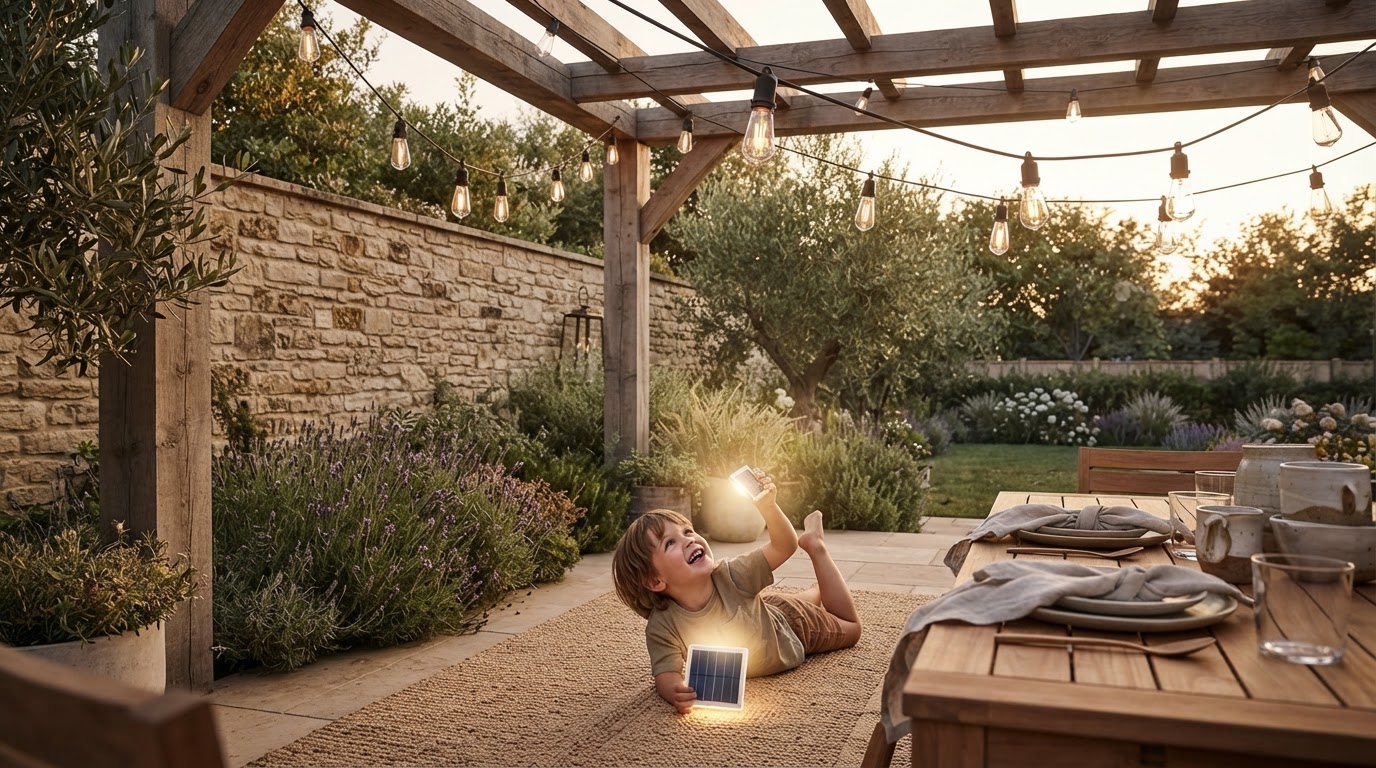
Installing Outdoor Solar String Lights on Timber Pergolas
 Daniel OkaforField Tester
August 23, 2026. This documentation covers the methods for mounting high-efficiency solar lighting to wooden overhead structures. It is written for homeowners who want to eliminate extension cords and electrical wiring from their outdoor living spaces.
The Challenge of Powering Open-Air Structures
I spent years dealing with the logistical headache of powering an open-air timber pergola at the far end of a garden. When you are working with a structure that sits forty feet from the nearest exterior outlet, your options are usually limited to expensive trenching or unsightly orange extension cords draped across the lawn. According to the International Association of Certified Home Inspectors (InterNACHI), exterior electrical outlets must be GFCI-protected and require specific weatherproof covers, which adds significant cost to a simple lighting project. During my first summer testing different setups, I realized that traditional plug-in lights were a liability in heavy rain. I tested this for three months using a standard 120V setup, and the constant tripping of the breaker during summer storms was enough to make me rethink the entire approach. The physical layout of a pergola also presents a mounting challenge; you have exposed rafters and beams where wires can easily become a tangled mess or a nesting spot for pests. I found that the primary hurdle isn't just getting light to the space, but doing so in a way that doesn't require a licensed electrician to tear up the landscaping. The transition to solar-powered systems wasn't just about saving energy; it was about the freedom to place light exactly where the architecture demanded it without being tethered to the house foundation.
Integrating Outdoor Solar String Lights into Rafters
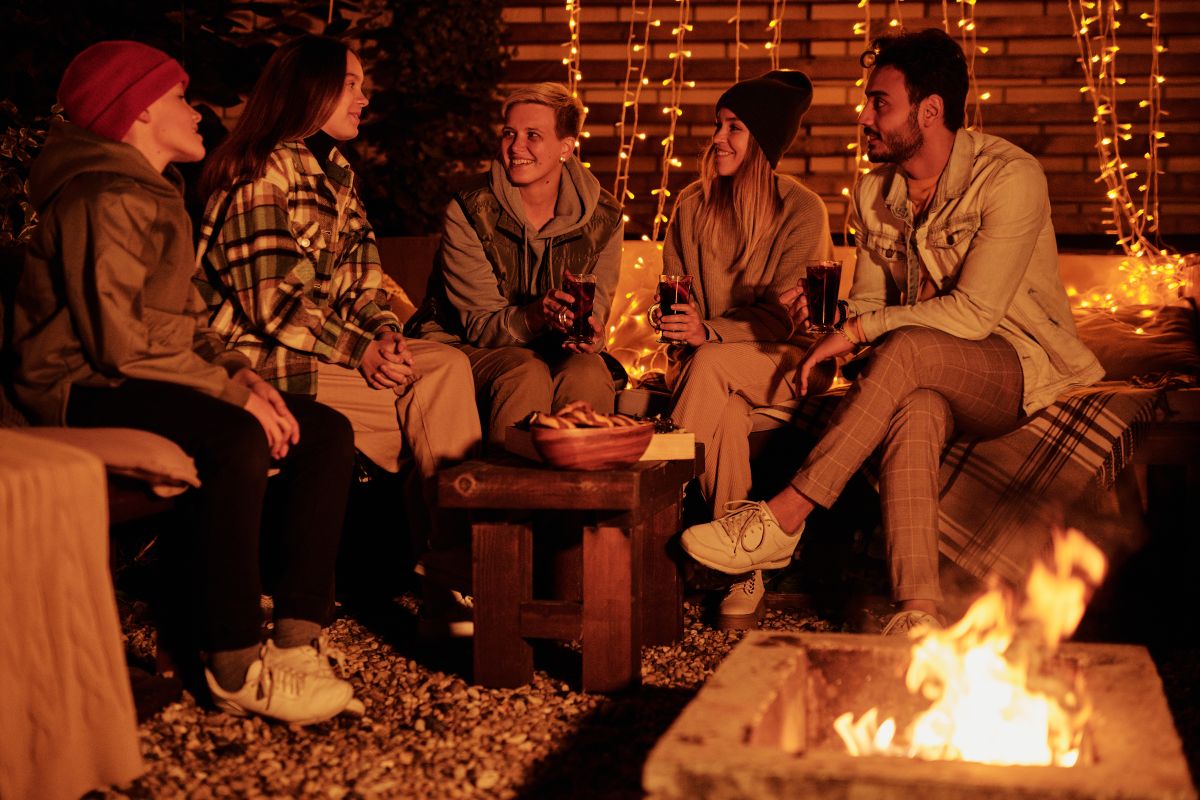
Photo by Askar Abayev on Pexels
What surprised me when I switched to Outdoor Solar String Lights was the consistency of the charging cycle even during overcast weeks. I started by using waterproof solar edison string lights 50ft because the length allowed me to wrap the perimeter of a 12x12 pergola with a single strand. Day three is where I noticed the real benefit: the automatic dusk-to-dawn sensor meant I never had to remember to flick a switch. When you are looking for the best solar lights for pergola applications, the weight of the cable matters. I found that heavy-duty rubberized cords stay taut between rafters much better than thin wire alternatives. For my specific setup, I utilized waterproof solar globe lights to create a soft, diffused glow that didn't feel like a stadium floodlight. The installation process is straightforward but requires a plan for the solar panel. I mounted my panel on the highest south-facing beam using the included bracket, ensuring it had at least six hours of unobstructed sky access. I also learned that how to hang outdoor string lights properly involves using stainless steel screw eyes rather than staples, which can pinch the insulation and lead to premature failure. Here's the moment it earned its place: we had a severe thunderstorm that knocked out the main house power for four hours. While the rest of the neighborhood went dark, the pergola stayed illuminated, providing a safe, lit path across the yard. The durability of the weatherproof solar gazebo lights proved itself when they survived a hailstorm that cracked my plastic deck chairs, yet the shatterproof bulbs remained intact.
A Framework for Pergola Lighting Success
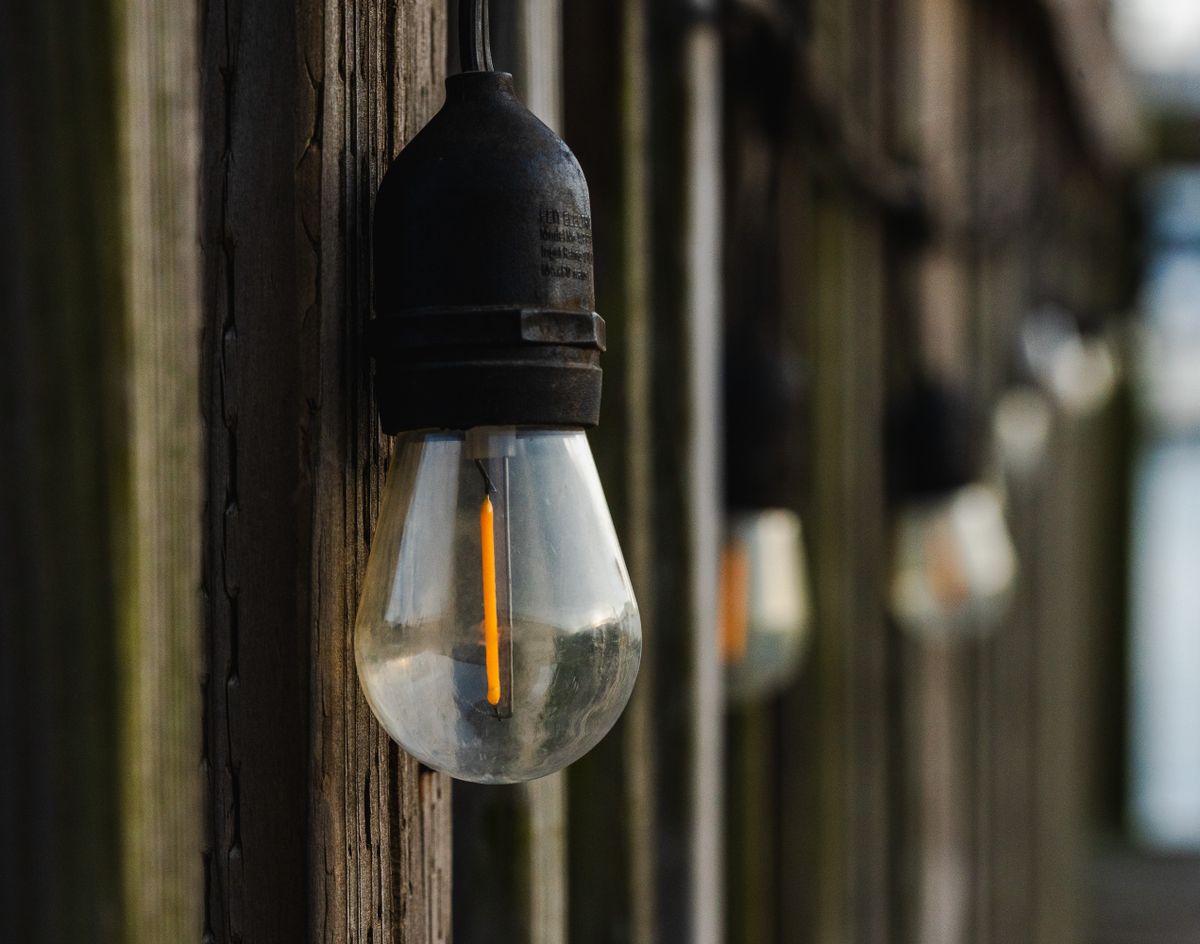
After testing multiple configurations, I’ve developed a specific framework for anyone looking to replicate this setup. The most common mistake I see is people underestimating the length of the lead wire—the distance between the solar panel and the first bulb. If your panel needs to be on the roof but your lights start on the rafters, you need that extra slack. I also suggest checking the lumen output; for a dining area, you want a warm white (2700K) rather than a cool blue light. What I'd do differently next time is install a guide wire (also known as a messenger cable) for spans longer than 15 feet to prevent the copper wire from stretching under its own weight over time.
- Identify the south-facing side of your pergola for optimal panel placement.
- Measure the total linear footage of your rafters and add 10% for 'swag' or drooping.
- Use stainless steel hardware to prevent rust streaks on your timber beams.
- Ensure the solar panel is accessible for occasional cleaning to maintain charging efficiency.
- Test the light placement at dusk with temporary clips before final mounting.
- Select shatterproof bulbs to avoid glass breakage during high winds.
Shop Outdoor Solar String Lights here