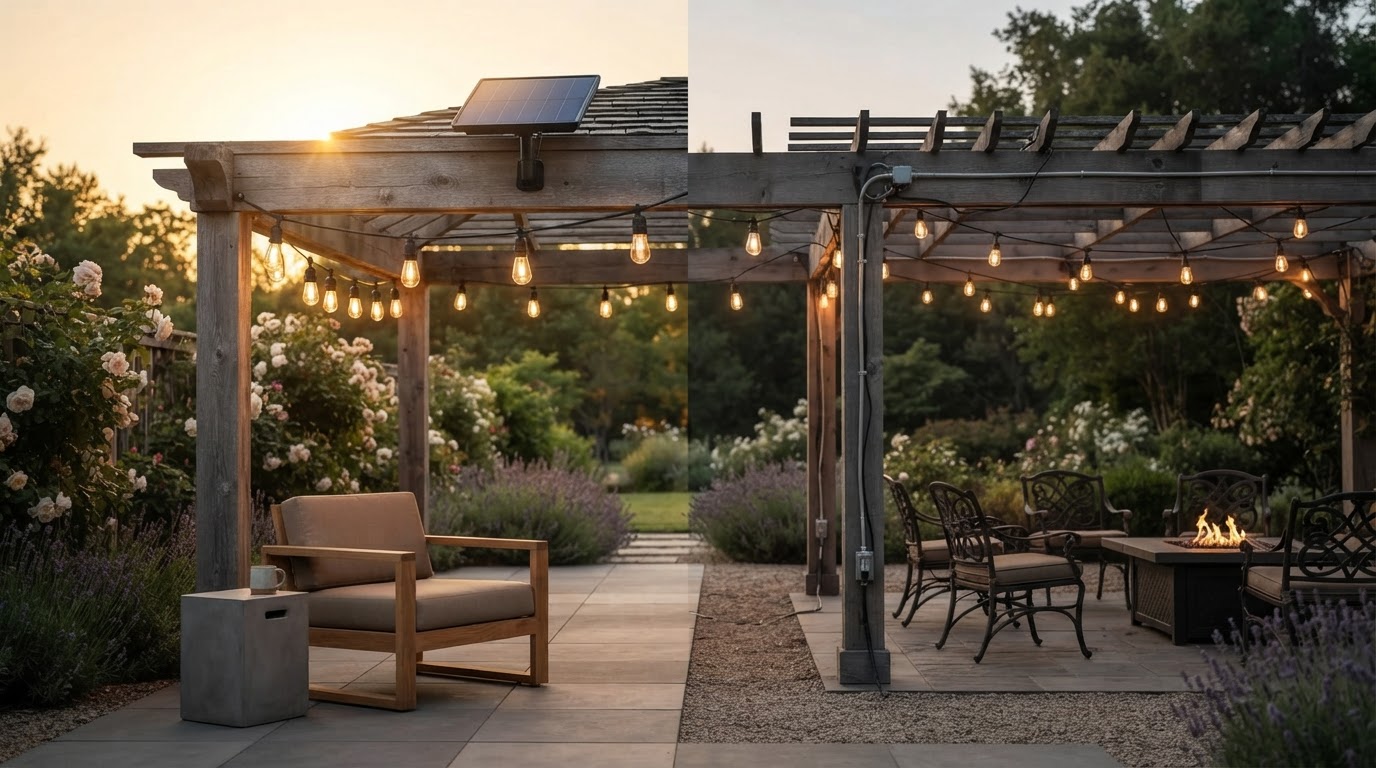
Optimizing Outdoor Solar String Lights for Large Patios
 Maya ChenContributing Editor
October 20, 2026. This analysis evaluates the technical thresholds of solar-powered illumination in residential landscapes. It is written for homeowners seeking to replace high-consumption grid lighting with autonomous solar systems.
The Efficiency Gap in Residential Solar Lighting
The conventional wisdom says that solar lighting is a set-it-and-forget-it solution for any backyard. However, the performance delta between consumer-grade solar and traditional 120V systems is often wider than manufacturers admit. According to SolarReviews, a leading industry aggregator, even the top-rated Brightech Ambience Pro Solar Powered Outdoor String Lights typically provide only 5 to 6 hours of illumination on a full charge. For users accustomed to the indefinite runtime of plug-in systems, this creates a significant utility gap during winter months or consecutive overcast days. Most consumers underestimate the photon-to-electron conversion loss inherent in small-format photovoltaic panels. While a 48-foot plug-in LED string light can maintain a consistent lumen output regardless of weather, solar variants are at the mercy of geographic latitude and shading coefficients. This is particularly relevant when restoring history with outdoor solar string lights, where the aesthetic of the past must meet the rigorous energy demands of the present. If the solar panel is not positioned with an unobstructed southern exposure, the actual runtime often drops below the advertised threshold, rendering the lights decorative rather than functional by late evening.
Technical Benchmarks for Outdoor Solar String Lights
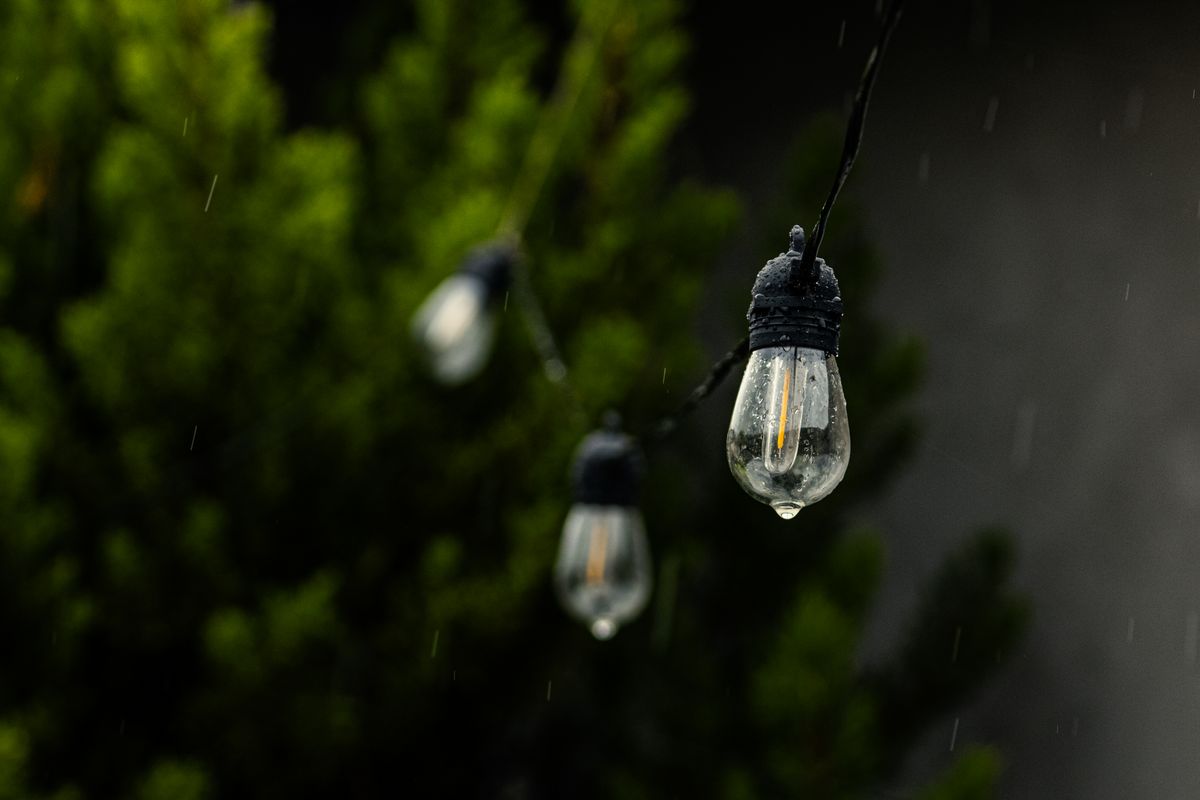
Photo by Ramsés Castillo on Pexels
To achieve a functional lighting environment, one must look past the ambiance and focus on the hardware specs. Here's the part nobody talks about: the relationship between bulb count and battery capacity. Many popular sets, such as the Brightech Ambience Pro, utilize a 27-foot strand but limit the count to just 12 LED bulbs to preserve the battery cycle. This results in roughly one bulb every 2.25 feet, a density that may be insufficient for task lighting over a grill or dining area. Run the math: a 1-watt LED bulb powered by a standard 3.7V lithium-ion battery requires a specific milliamp-hour (mAh) rating to sustain brightness. When selecting solar edison bulbs for outdoor string lighting, the weight of the glass and the efficiency of the filament determine whether the system will flicker or fade prematurely. For those managing commercial spaces, the question of how long outdoor solar string lights stay lit for cafes becomes a matter of operational overhead. If the lights fail before the last table is cleared, the solar investment loses its ROI. High-performance units now feature weather-resistant casing and waterproof solar globe lights with higher IP ratings to survive the 18,000 annual impressions of moisture and dust common in coastal or temperate climates. The integration of solar edison bulbs outdoor has improved the aesthetic, but the core challenge remains the energy density of the included power cells.
Framework for Solar Lighting Deployment
Selecting a system requires a move away from aesthetic preference toward a rigorous assessment of site conditions. Before purchasing, verify that the solar panel is detachable or has a lead wire long enough to reach a high-insolation zone, even if the lights themselves are under a pergola or deep eaves. This is a critical failure point for integrated units found in budget solar café lights. I’ll change my mind when manufacturers start shipping standard 18650 replaceable batteries in every unit, allowing users to upgrade capacity as cell technology improves. Until then, use this checklist to audit a potential installation:
- Calculate the total linear footage required and compare it against the bulb-per-foot density to ensure adequate lumen spread.
- Verify the battery's mAh rating against the total wattage of the LED strand to predict real-world runtime.
- Assess the mounting hardware for the solar panel to ensure it can be angled at 30 to 45 degrees for optimal solar harvest.
- Check the IP (Ingress Protection) rating; look for IP65 or higher for permanent outdoor installations.
- Determine if the system includes a manual override or a dusk-to-dawn sensor that can be deactivated to conserve power for specific events.
Shop Outdoor Solar String Lights here: https://outdoorsolarstringlights.com
Sources
- Solar Powered LED String Lights | Ships Free
- Solar String Lights, Camping & Outdoor ...
- [The 5 Best Solar String Lights Reviewed [2026]](https://www.solarreviews.com/blog/top-solar-string-lights)