Commercial Grade Outdoor Solar String Lights Framework
 Priya RamanSenior Analyst
August 11, 2026 — The shift toward sustainable infrastructure has accelerated the demand for high-capacity Outdoor Solar String Lights capable of professional-grade performance.
Selecting equipment for public or high-traffic environments requires a departure from consumer-level expectations, prioritizing structural integrity and energy management. According to SolarReviews, the most effective systems utilize advanced photovoltaics like those found in the Brightech Ambience Pro series to ensure consistent illumination even in variable weather conditions. As property managers and homeowners seek permanent installations, the distinction between decorative accents and true utility-grade lighting becomes critical for long-term ROI.
The Three Pillars of Commercial Utility
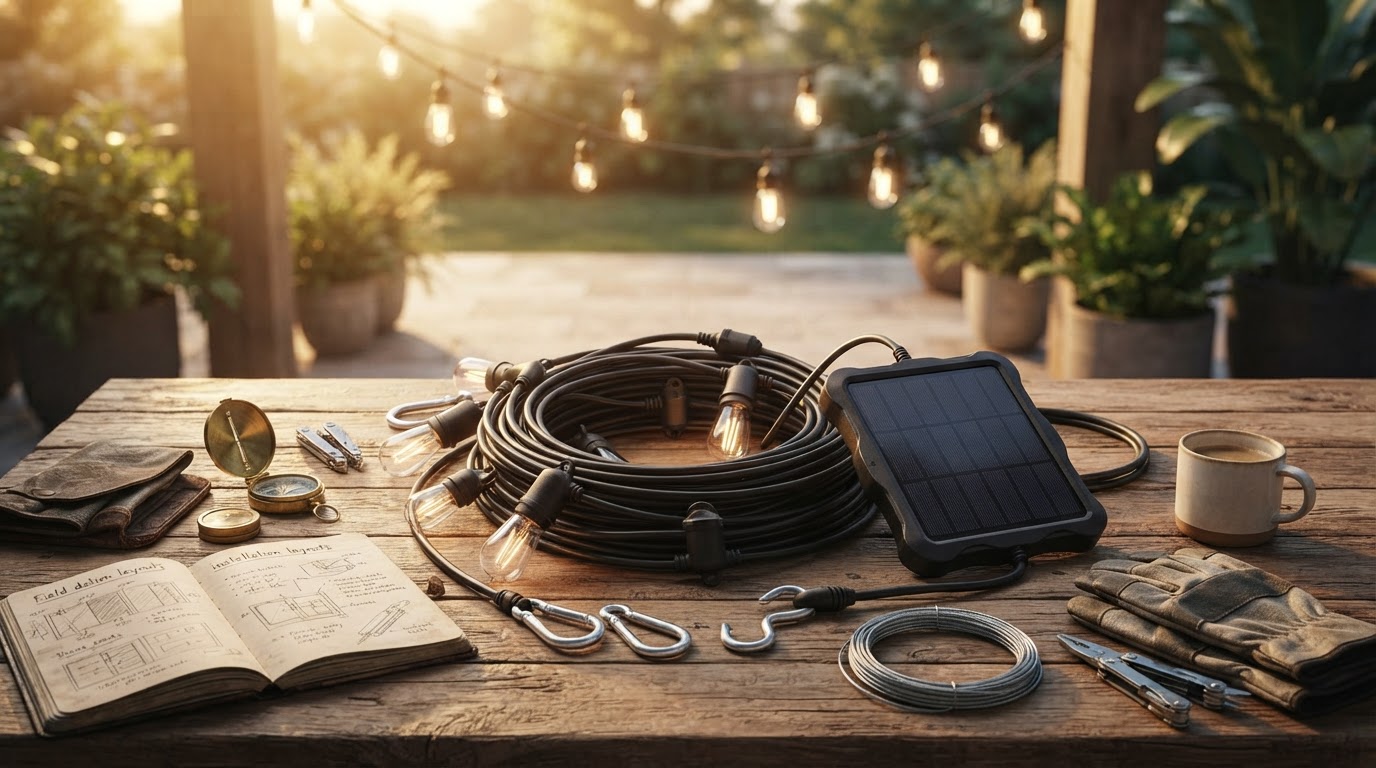
To evaluate professional systems, think of it as a matrix of three critical axes: mechanical durability, electrical capacity, and thermal resilience. The first axis, mechanical durability, focuses on the gauge of the wiring and the composition of the bulb housing. True commercial systems, such as the XP08 Solar LED String Light System, utilize professional-grade cabling designed to withstand constant tension and UV exposure over several years. The second axis is electrical capacity, which dictates the runtime-to-charge ratio. High-end units often feature separate, oversized solar panels rather than integrated small cells, allowing for larger lithium-ion batteries that provide 8 to 12 hours of light after a single day of solar soak. The third axis, thermal resilience, involves the IP (Ingress Protection) rating. While standard lights might offer IP44, commercial grade Outdoor Solar String Lights typically target IP65 or higher, ensuring the internal circuitry remains sealed against driving rain and snow.
The decision rule: if the installation is intended for a permanent structure or a commercial patio, the system must meet a minimum 20AWG wire thickness and provide a detached solar panel for optimal positioning. Once you see it this way, it becomes clear that the upfront investment in heavy-duty components prevents the frequent replacement cycles common with entry-level hardware. By focusing on these three pillars, users can ensure their lighting remains a functional asset rather than a maintenance burden.
Expert tip: When installing heavy-duty strings, always verify the maximum tensile strength of the lead cable; commercial systems like those with WeatherTite technology are designed to be hung without additional guide wires over short spans, but long runs still benefit from a stainless steel support cable to prevent port fatigue.
For those managing smaller spaces, integrating shatterproof solar bistro lights can provide a similar aesthetic with reduced weight. In urban environments, prioritizing [Outdoor Solar String Lights for balcony resilience](/blog/shatterproof-solar-edison-bulbs-comparison) ensures the hardware survives high-wind corridors. Aesthetics also play a role, where industrial style solar outdoor lighting can match the ruggedness of the wiring with a specific architectural look. Regardless of the choice, ensuring you have [shatterproof solar edison bulbs](/blog/shatterproof-solar-edison-bulbs-comparison) is the standard for any high-traffic zone.
Understanding these technical requirements ensures that your lighting choice meets the specific demands of your environment.
Shop Outdoor Solar String Lights.
Sources
Photo by Nishino Minase on Pexels
- Ambience Pro Solar Non Hanging | WeatherTite Cable
- XP08 Solar LED String Light System
- Solar Bistro String Lights (50ft Length)