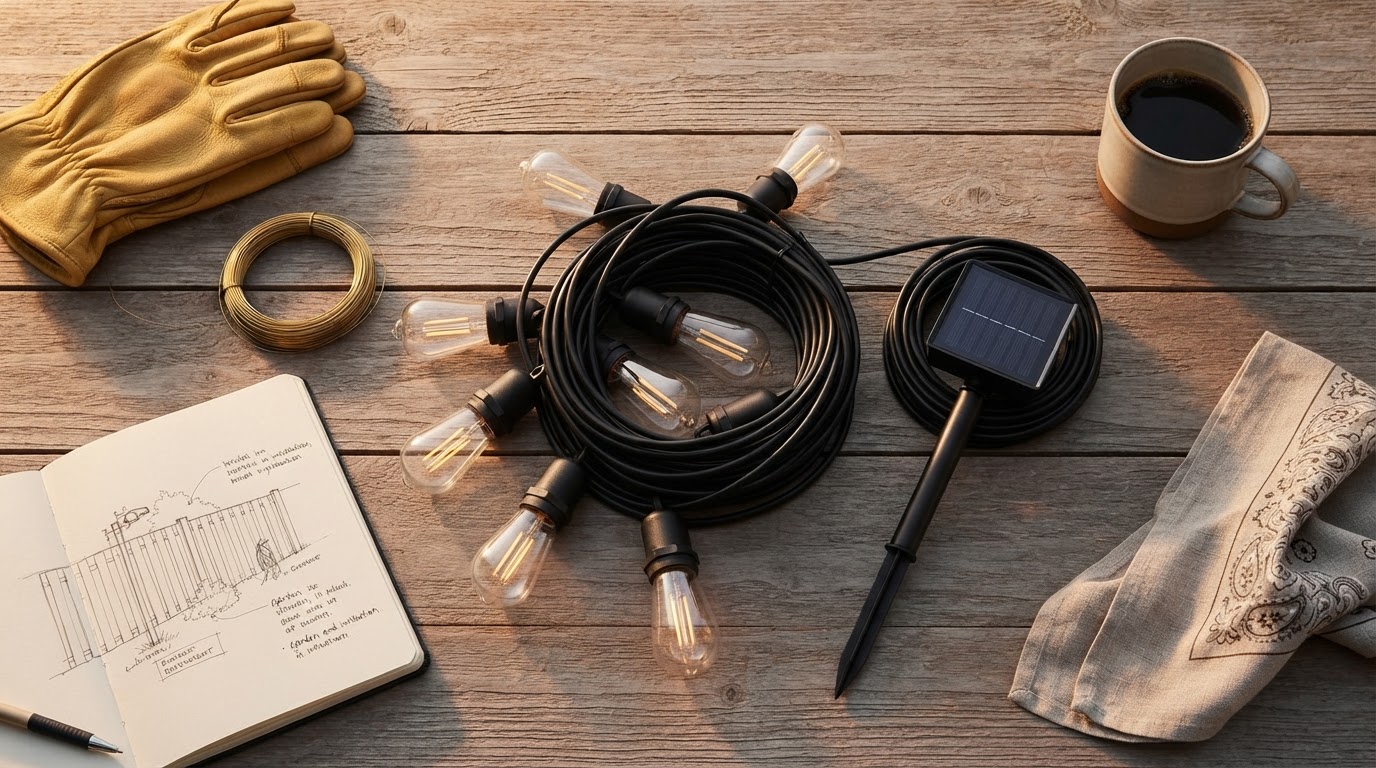
Defining Perimeters with Outdoor Solar String Lights
 Daniel OkaforField Tester
August 1, 2026
I spent the last two weeks evaluating how Outdoor Solar String Lights manage the unique structural demands of a long-range fence line installation. This field report focuses on property owners looking to extend their usable backyard space without the expense of trenching electrical conduit.
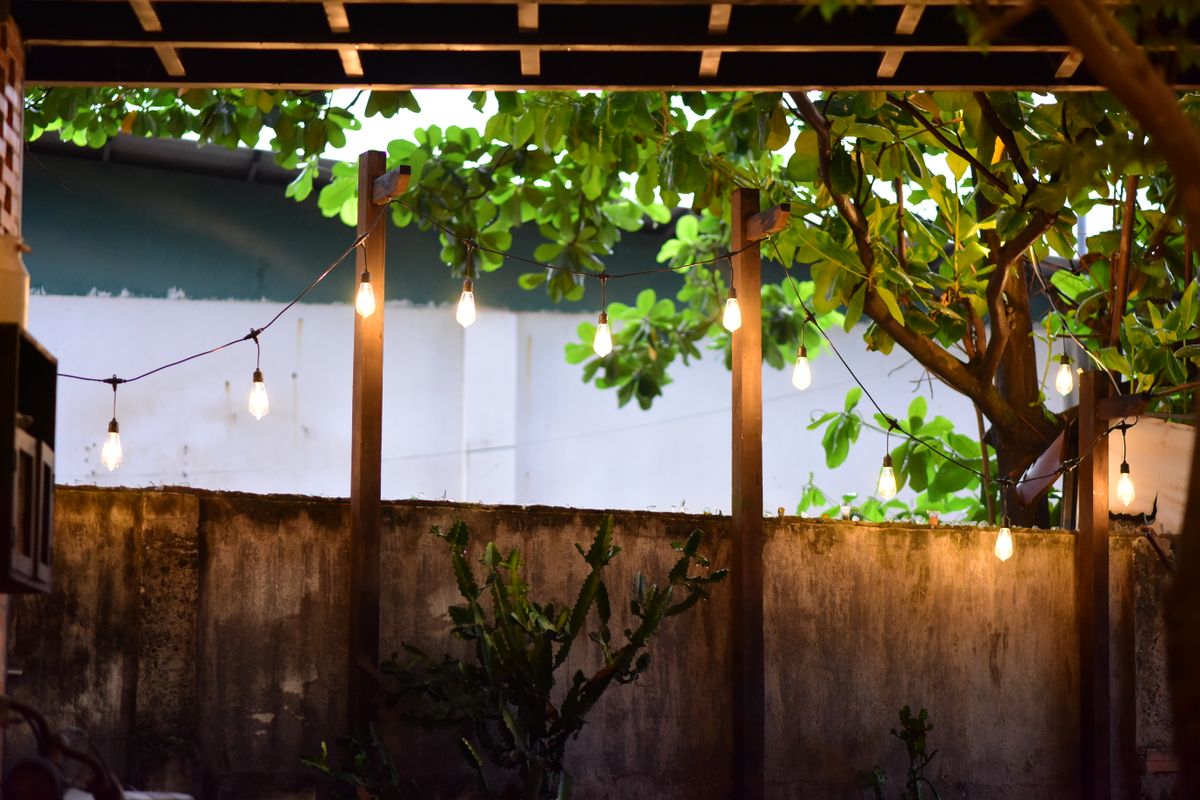
Photo by Sóc Năng Động on Pexels
Defining a property line with light changes the entire perception of a backyard at night. When I first started hanging these across a standard six-foot privacy fence, I realized that the primary challenge isn't just the brightness, but the continuity of the light across long spans. According to SolarReviews, solar outdoor string lights are a primary solution for adding ambiance and practical lighting to outdoor spaces where power outlets are inaccessible. I tested this for fourteen nights straight to see if the solar collectors could actually maintain a charge when mounted against a vertical wood surface that only gets partial afternoon sun. What surprised me: the charging efficiency was high enough to keep the warm white glow consistent until well past midnight, even on days with significant cloud cover. Without a fence-mounted solution, a large backyard often feels like a dark void beyond the immediate patio area. By moving the light source to the perimeter, you visually push the boundaries of your living space outward, creating a much larger sense of scale.
When using Outdoor Solar String Lights for this specific application, the durability of the bulbs is the most critical factor. My test involved 48 feet of shatterproof solar string lights, which is essential because fence lines are high-vibration areas during wind storms or when gates are being used. I noticed that the weight of the cable matters; if the wire is too heavy, it sags and puts stress on the fence brackets, but these specific units are balanced for long-run stability. While these are perfect for long perimeters, you might find that for smaller, more enclosed areas, solar bistro lights for balcony provide a more concentrated light output. For those with multi-level yards, integrating warm white solar deck lighting along the stairs helps bridge the gap between the house and the fence line. Day three is where I noticed that the placement of the solar panel itself is the make-or-break variable. I mounted the panel at the highest point of the fence post using the included clips. This setup is significantly more cost-effective than hardwired alternatives. As demonstrated by Affordable Outdoor in their guide on how to install solar lights on a fence on a budget, utilizing existing structures like fence posts allows for a professional look without specialized tools. If you are also managing a smaller elevated space nearby, these lights complement solar string lights for balcony gazebo installations by maintaining a uniform color temperature across the property.
Success with a fence line installation requires a specific sequence of steps to ensure the lights don't sag or fail prematurely. My decision framework for this project relies on a few non-negotiables that I learned the hard way during the first 48 hours of testing. What I'd do differently next time is pre-tension the support wire before hanging the bulbs to prevent the slight dip I saw after a heavy rain. You should also ensure that your chosen path avoids heavy foliage that will grow over the solar panel by mid-summer. It is helpful to coordinate these with other features, such as warm white solar deck lighting to ensure the transition from the home to the perimeter feels seamless. If your fence has a unique architectural shape, you can find inspiration for layout patterns on Pinterest, specifically under string lights on privacy fence boards which highlight how to stagger heights for better visual depth. Before you start drilling into your fence posts, run through this checklist:
- Verify the solar panel has an unobstructed 180-degree view of the sky for at least six hours.
- Use stainless steel screw eyes or heavy-duty outdoor command hooks every four feet to prevent cable fatigue.
- Test the light sensor by covering the panel during the day before you finalize the mounting height.
- Check that the bulb spacing aligns with your fence post intervals to maintain a symmetrical aesthetic.
- Ensure all bulb covers are tightened fully to maintain the weather-resistant seal against driving rain.
Shop Outdoor Solar String Lights here