Choosing Color for Outdoor Solar String Lights
 Daniel OkaforField Tester
September 26, 2026. Finding the right color temperature for residential exteriors requires a balance between visibility and comfort. This guide helps homeowners select the ideal Kelvin rating to ensure their outdoor spaces feel inviting rather than industrial.
The Psychology of the Kelvin Scale
When I first started installing exterior fixtures, I assumed brighter meant better. I quickly learned that the "color" of light—measured in Kelvin (K)—dictates the entire mood of a backyard. According to Vision Outdoor Lighting, the Kelvin scale for residential use typically spans from 2200K to 4000K, where lower numbers represent warmer, amber tones and higher numbers lean toward cool, blue-white light. I tested this for a month in my own garden, swapping out different bulbs to see how they impacted the space. What surprised me was how a 5000K "daylight" bulb, which seems logical for visibility, actually made my patio feel like a high-security parking lot.
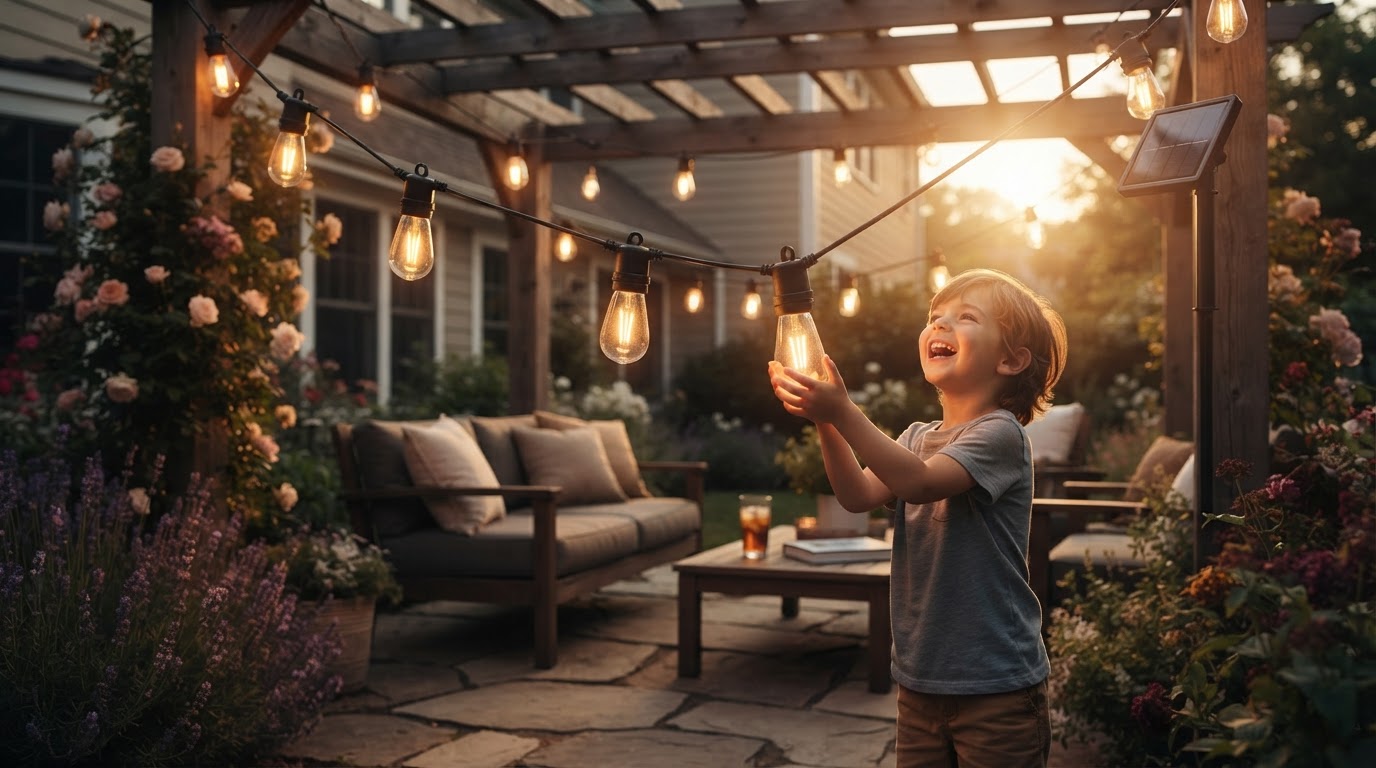
Ecofi notes that 5000K is excellent for high-visibility areas like roadways or sports arenas, but for a home, it often feels harsh. In my experience, 2700K is the sweet spot. It mimics the soft, golden glow of traditional incandescent bulbs. When you are looking at solar patio lights, the goal is usually to create a space where people want to linger, not a space that feels clinical. I found that higher Kelvin temperatures also tended to wash out the natural colors of my stone pavers and wooden deck, making everything look gray and flat. Tru-Scapes Landscape Lighting confirms that 2700K is the most popular choice for residential landscapes because it enhances the organic textures of the environment. If you go too cool, you lose that cozy, "hearth-like" quality that makes a backyard feel like an extension of the home.
Performance of Outdoor Solar String Lights
I spent three weeks testing different configurations of Outdoor Solar String Lights to see how color temperature held up under solar power constraints. Day three is where I noticed a significant difference in how the eye perceives light levels. Even though the lumens might be the same, a warm white light feels less intrusive to neighbors while still providing enough illumination for dining. I specifically looked at how [warm white solar globe lights](/blog/warm-white-solar-globe-lights) performed against standard LED sets. The globe style, when paired with a 2700K to 3000K temperature, provides a diffused glow that avoids the "piercing" effect of exposed chips.
Waterproof solar globe lights are a heavy hitter in this category, and I found that the warmth of the light actually helps hide the slight flickering that can occur when solar batteries are reaching the end of their discharge cycle late at night. If you are integrating these into backyard lighting ideas for summer, you have to consider the foliage. Vision Outdoor Lighting suggests 2700K for tree uplighting to get a rich glow on bark, and I found this applies to string lights draped through branches as well. The warmth makes the green leaves look lush, whereas a 4000K light made the leaves look sickly and pale. I also experimented with [warm white solar fairy lights](/blog/warm-white-solar-fairy-lights) for accenting smaller shrubs. Because fairy lights have smaller diodes, the 2700K temperature is vital; otherwise, they look like tiny blue sparks rather than soft embers. Here's the moment it earned its place: during a late-night rainstorm, the warm glow reflecting off the wet pavement felt sophisticated and high-end, proving that solar options can compete with hardwired systems if the color temperature is dialed in correctly.
Selecting Your Ideal Temperature Framework
Choosing the right temperature isn't just about personal preference; it’s about the specific application and the existing materials in your yard. According to RC Facade Lighting, while 3000K and 4000K are common for residential exteriors, the "vibe" dictates the drop to lower Kelvin. What I'd do differently next time is map out my zones before buying. I mixed a 4000K security light with 2700K string lights, and the clash was jarring. To avoid this, follow this decision framework when setting up your Outdoor Solar String Lights:
- Identify the primary use: Use 2700K for dining and lounging areas to promote relaxation, and reserve 3000K for paths or stairs where safety and crispness are slightly more important.
- Match your architecture: If your home has warm-toned siding, brick, or wood, stay within the 2200K to 2700K range. If you have a modern, white, or gray exterior, 3000K can provide a clean, contemporary look.
- Consider the season: Warm white is universal, but it is especially effective for solar patio lights used during autumn and winter to provide a sense of warmth.
- Check the CRI: Look for a high Color Rendering Index (CRI) alongside your Kelvin choice; this ensures the colors of your garden furniture and plants look accurate under the light.
- Test the transition: Ensure your string lights don't compete with interior light spilling out from windows. If your living room uses warm lamps, your patio lights should match to create a seamless indoor-outdoor flow.
Shop Outdoor Solar String Lights here
Sources
- 3000K Vs. 4000K Vs. 5000K: Best Color Temperature For Outdoor ...
- Landscape Lighting Color Temperature Guide: Choosing the ...
- Color Temperature for Outdoor Lighting | Complete Selection Guide